Why it's Important to Play with a Straight Bow and How to Achieve it
- Amanda Goodwin
- Sep 1, 2025
- 2 min read
If you've ever heard yourself create scratchy, crunchy, or wispy sounds on the violin, the main culprit might be how you are pulling the bow. To achieve your best sound, you need to play with a straight bow.
So what does it mean to play with a straight bow? How do you know you've achieved it (other than avoiding poor tone production)? If you're bowing straight, the bow will always be parallel to the bridge and fingerboard. The right arm position will also create different shapes based on what part of the bow you're playing in.
Right Arm Positions
In the middle of the bow, the arm will make a square or rectangular shape. Notice how the right wrist is in a neutral position, the stick is positioned over the hair, and the bow is parallel to the bridge and fingerboard.

In the lower half or at the frog, the arm will make a triangle shape. Notice how the wrist is slightly raised, the stick is tilted so it is no longer directly over the hair, and the bow is parellel.

At the tip of the bow, the arm will create a shape that looks similar to the state of Nevada. Notice how the bow is still parallel, the right fingers are elongated, and there is a slight bend to the wrist. The stick has returned to hovering over the hair.

Moving the Bow
The middle is the easiest place to start learning how to play with a straight bow. You only need to open and close the arm at the elbow, similar to the way a gate opens and closes. Start with small motions and stay in the upper half of the bow. Ensure that the upper arm stays still and the bow is pararllel to the bridge and fingerboard. Work your way up to using the entire upper half of the bow.

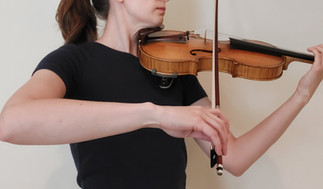


Playing in the lower half is more complex and requires upper arm movement. While at the frog, the upper arm will be placed forward and inwards, creating the triangle shape. The wrist will be slightly bent, causing the stick to tilt away from you and half the bow hair will contact the string.
When moving to the middle, the upper arm moves back and the wrist will gradually flatten out to a neutral position. The tilt of the bow will gradually reduce until all hair contacts the string and the stick is positioned directly above the hair. When returning to the lower half, the wrist will gradually raise and tilt the bow away. The upper arm moves forward and inwards, returning to the triangle shape.


Follow these tips and you'll be on your way to building excellent tone production!
Looking for more bow technique exercises? Check out my book "Beginner Bow Technique" and start feeling more comfortable with your bow control!


Comments